

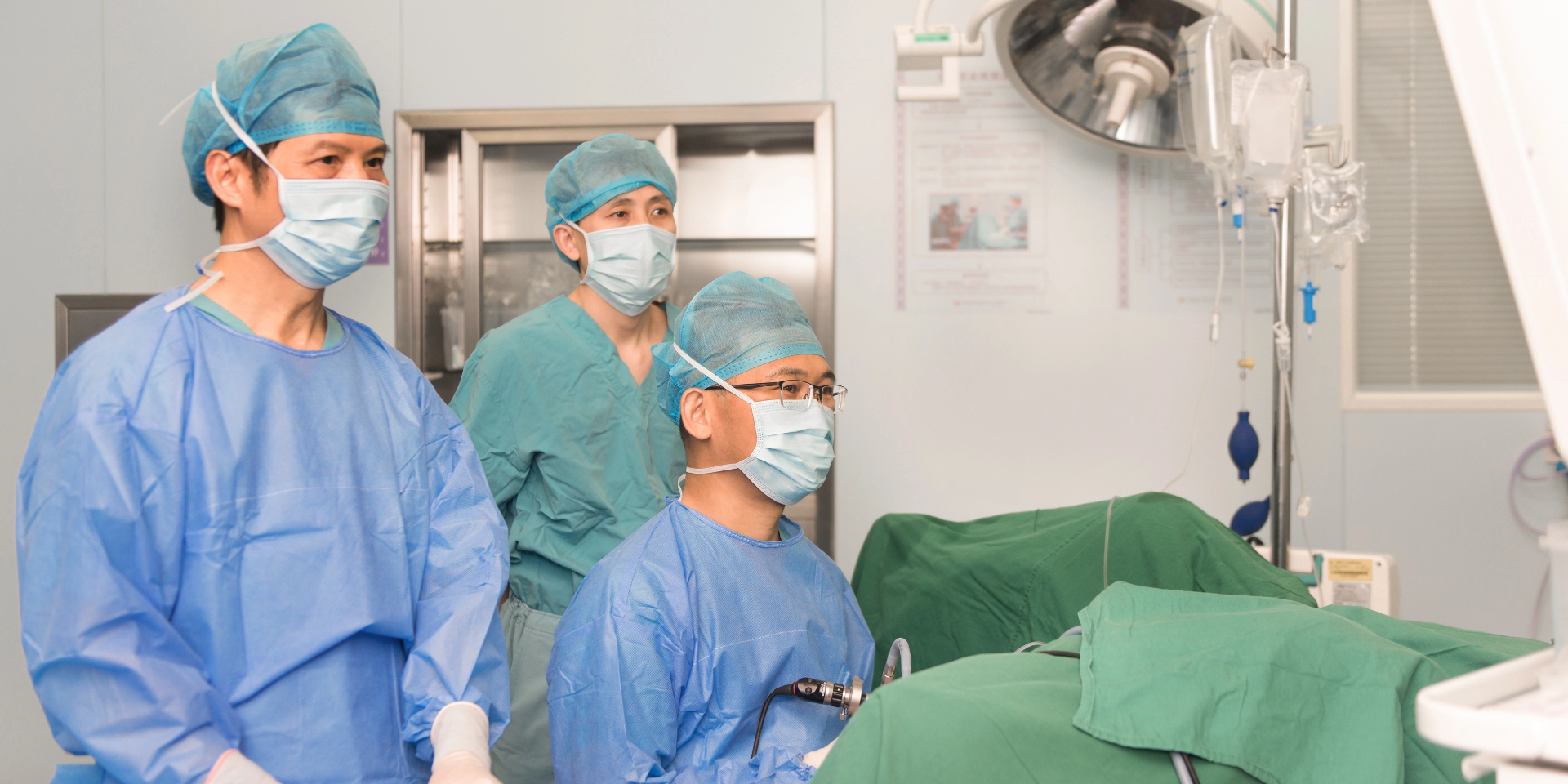
Ⅰ. Department Introduction
The Hepatic-Biliary-Pancreatic Surgery Department of Foshan Fosun Chancheng Hospital has invited Professor Zhang Jihong as the Academic Leader (Chief Expert). Professor Zhang holds an MD from the First Affiliated Hospital of Sun Yat-sen University, serving as Chief Physician and Master's Supervisor in Hepatobiliary and Pancreatic Surgery. Led by Department Director Chief Physician Peng Liang and Deputy Director Associate Chief Physician Zhang Haixiong, the department has forged technical characteristics of "safety, efficiency, precision, and minimal invasiveness", providing high-quality medical services for patients.
The department boasts 2 Chief Physicians, 1 Associate Chief Physician, 4 physicians at or below intermediate level, and 36 inpatient beds. Equipped with advanced diagnostic and therapeutic facilities including high-end laboratory equipment, ultrasound, CT, MRI, DSA, and PET-CT, it provides robust support for the diagnosis and treatment of hepatobiliary and pancreatic diseases. Additionally, it features state-of-the-art laminar flow operating rooms, imported laparoscopic surgical systems, electrosurgical workstations, surgical robots, intraoperative ultrasound, and advanced laparoscopic instruments.
The department specializes in the precise diagnosis and treatment of all surgical diseases involving the liver, biliary tract, pancreas, spleen, peritoneal cavity, and retroperitoneum, and performs all Grade IV hepatobiliary and pancreatic surgeries. Aligning with the trend of minimally invasive surgery, it widely conducts laparoscopic procedures for hepatobiliary and pancreatic diseases, and offers robotic surgery for eligible patients. With qualifications and expertise in ultrasound intervention and interventional radiology, the department has formed a unique disciplinary advantage integrating precise surgery (open, minimally invasive, robotic), ultrasound intervention, and interventional radiology, accumulating profound experience in managing complex and refractory abdominal surgical diseases.
Its clinical scope covers the diagnosis and treatment of hepatobiliary, pancreatic, splenic, and retroperitoneal surgical diseases, with particular proficiency in liver tumors, biliary calculi, biliary tumors, pancreatic tumors, pancreatitis, portal hypertension, splenic tumors, splenomegaly with hypersplenism, and giant retroperitoneal tumors. The department performs various open, laparoscopic, and robotic surgeries, including high-difficulty procedures such as left/right hemihepatectomy, trisegmentectomy, combined organ resection for giant liver cancer, hilar cholangiocarcinoma resection, and pancreaticoduodenectomy (both via laparoscopy and robotic surgery). Embodying the therapeutic concepts of modern minimally invasive surgery, Enhanced Recovery After Surgery (ERAS), and refined humanistic management, it demonstrates high-level expertise in treating complex conditions such as hepatobiliary and pancreatic malignancies, complex hepatolithiasis, biliary tract injury, pancreatic duct stones, obstructive jaundice, upper gastrointestinal bleeding, pancreatic fistula, biliary fistula, and acute abdomen.
Leveraging its strength in ultrasound and interventional radiology, the department excels in interventional diagnosis and treatment, including microwave ablation for liver cancer, transcatheter arterial chemoembolization (TACE) and hepatic arterial infusion chemotherapy (HAIC) for liver cancer, transjugular intrahepatic portosystemic shunt (TIPS) for advanced portal hypertension, percutaneous transhepatic cholangioscopy (PTCS) for stone extraction, and percutaneous transhepatic biliary drainage (PTBD) with biliary stent placement for biliary obstruction. These capabilities provide strong technical support for surgery-based comprehensive treatment, ensuring patients receive "safe, effective, comfortable, and convenient" medical experiences.
Ⅱ. Technical Features
Guided by the core values of "People-oriented, treating patients like relatives; virtue-based, striving for excellence" and adhering to the principle of "Patient interests first", the department pursues and builds technical characteristics of "safer, more effective, more precise, and more minimally invasive" under the forward-looking management philosophy of Chief Expert Professor Zhang Jihong.
(Ⅰ) Safer
1. Accurate Diagnosis
Targeted high-end diagnostic equipment (ultrasound, CT, MRI, DSA, PET-CT, etc.) and Multidisciplinary Team (MDT) consultations ensure correct diagnosis.
2. Optimal Treatment Plan Selection
- MDT Consultations: Composed of experts from Hepatobiliary and Pancreatic Surgery, Gastroenterology, Oncology (for cancer patients), Radiology, Anesthesiology, Pathology, ICU, and departments related to comorbidities affecting anesthesia and surgery, to select the best surgical plan.
- External Consultations: Consultations with domestic authoritative experts and precise pathological diagnosis when necessary.
- Sino-US Teleconsultation: Available for a small number of rare and refractory diseases.
- Preoperative Discussions: Presided over by the academic leader or department director to clarify surgical indications and specific surgical plans.
3. Safer Surgical Treatment
- Surgical approach selection adheres to the principle of "Patient safety first, minimally invasive surgery second", complying with the requirements of aseptic, bloodless, tumor-free, and no-touch techniques.
- Precise preoperative evaluation maximizes surgical tolerance and postoperative recovery safety, including assessment of general condition, nutritional risk, coagulation function, thrombosis risk, liver function, vital organ lesions and function, and 3D visualization analysis.
- Safer surgical process: Hierarchical responsibility system for surgeries; major surgeries and surgeries for special patients are personally performed by the academic leader (Chief Expert), department director, or Chief Physician (patients may request specific surgeons, including renowned external experts); close collaboration with highly professional anesthesiologists, supported by 3D/4K ultra-high-definition laparoscopic systems, imported minimally invasive surgical instruments, and highly safe surgical procedures (e.g., selective hepatic blood flow occlusion and accurate parenchymal transection).
- Refined postoperative management ensures rapid patient recovery: Continuous refined management after surgery, implementation of the three-level ward round system, regular ward rounds, close monitoring of condition changes, and proactive provision of basic nursing, disease-specific nursing, and psychological care.
(Ⅱ) More Effective
1. Preoperative Guarantee
Adequate preoperative preparation optimizes patients for surgery: e.g., controlling cholangitis before hepatolithiasis surgery; converting unresectable tumors to resectable ones via conversion therapy; reducing the size of giant tumors with neoadjuvant therapy to facilitate complete surgical resection.
Preoperative 3D visualization imaging technology provides navigation for surgical procedures.
2. Intraoperative Guarantee
Precise anatomical techniques, intraoperative ultrasound, fluorescence imaging technology, and rapid and accurate pathological diagnosis ensure surgical precision.
3. Postoperative Guarantee
Targeted postoperative treatment promotes rapid recovery and reduces complication risks.
For patients with high-risk tumors, postoperative adjuvant therapy (e.g., antiviral therapy, TACE, targeted immunotherapy for high-risk recurrent liver cancer) is administered based on biological characteristics and genetic testing to enhance efficacy and prevent recurrence.
(Ⅲ) More Precise
- Preoperative comprehensive analysis of imaging data and 3D visualization navigation enable the design of precise surgical plans and emergency protocols.
- Intraoperative precision is guaranteed by experts' sophisticated surgical anatomical skills, guidance from intraoperative ultrasound and fluorescence imaging, and rapid intraoperative pathological examination.
(Ⅳ) More Minimally Invasive
1. Priority to Minimally Invasive Surgeries
Laparoscopic and robotic surgeries are the first choices; laparoscopy-assisted surgery is considered when pure laparoscopy is not feasible; open surgery is the last option.
2. Advanced Minimally Invasive Equipment
Ultra-high-definition laparoscopic systems, intraoperative ultrasound, and fluorescence imaging guide surgeons in performing precise operations with advanced laparoscopic instruments.
3. Expert Leadership in Minimally Invasive Surgeries
Every minimally invasive surgery is performed or supervised by senior experts with mature skills and rich experience.

 微信公众号
微信公众号